
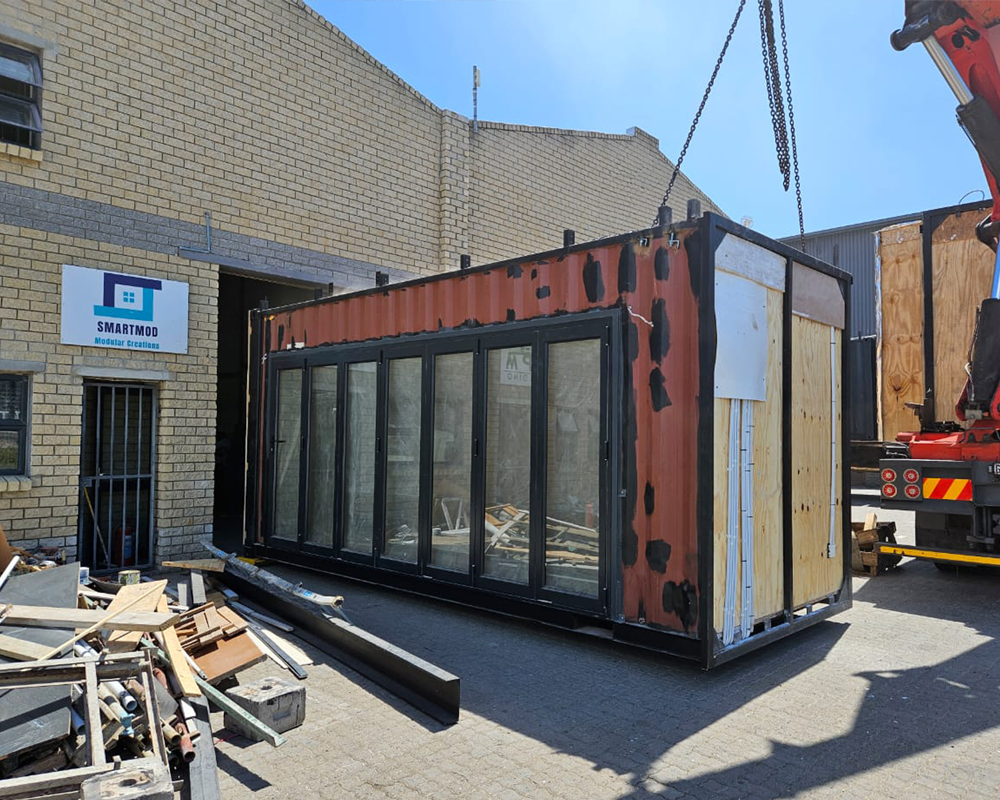
FROM WASTE TO WONDER: THE ECO IMPACT OF REPURPOSING SHIPPING CONTAINERS
Every year, thousands of decommissioned shipping containers sit idle in ports around the world – massive steel boxes with nowhere to go. But a growing number of forward-thinking builders are turning this industrial “waste” into one of the most innovative and sustainable building materials available today. Repurposing containers into homes and workspaces isn’t just a smart design choice, it’s a meaningful way to reduce environmental impact and rethink how we use our resources.
Recycling on a Massive Scale
Traditional construction consumes huge quantities of raw materials – bricks, cement, timber, and steel. Many of which are energy-intensive to produce. When we build with used shipping containers, we’re essentially upcycling industrial waste that would otherwise require energy to melt down or dispose of. One container home can reuse over 3,500kg of steel – saving materials, energy, and emissions.
Less Demand, Less Damage
By reducing the demand for traditional building materials like concrete and brick, container homes indirectly help lower the carbon footprint of the construction industry. Cement production alone accounts for about 8% of global CO₂ emissions. Repurposed containers allow us to build durable, modular spaces with far fewer resources, helping to reduce deforestation, mining, and other extractive practices.
Built to Last
Shipping containers are engineered to withstand the harshest weather conditions. Oceans, storms, and heavy loads. This strength makes them ideal for structural reuse. With proper insulation and planning, they can become thermally efficient, low-maintenance buildings that stand the test of time and minimizing the need for costly repairs or frequent rebuilds.
A Platform for Green Innovation
Container architecture encourages smarter, more efficient building techniques. With a smaller footprint and modular layout, it becomes easier to incorporate eco-friendly features like solar power, rainwater harvesting, greywater systems, and passive cooling. Many container homes also support off-grid living, further reducing reliance on municipal infrastructure and fossil fuels.
From Industrial Waste to Inspired Design
What began as a cost-saving measure for tiny homes and emergency housing has evolved into a movement for architects, designers, and homeowners who want more from their space and less from the planet. Container builds now range from stylish city lofts to serene off-grid retreats. They prove that sustainability doesn’t have to come at the expense of comfort or creativity.